
The Cathedral of Black and White Photography: Alinder Gallery
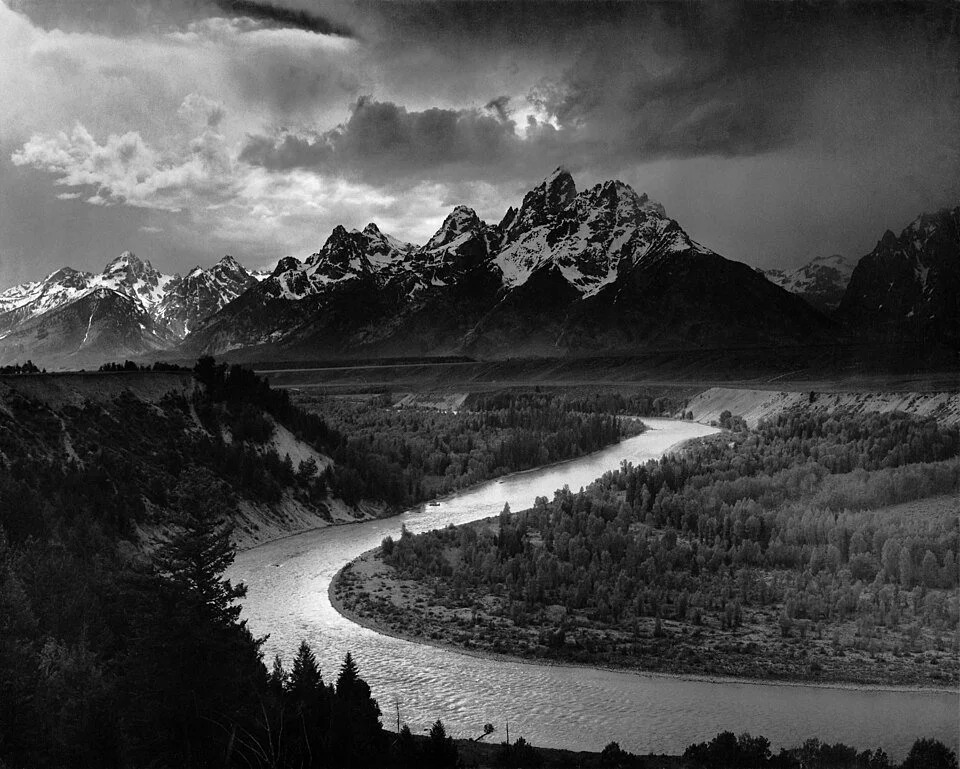
The Tetons and the Snake River (1942) by Ansel Adams (Source: National Archives)
(Disclaimer: This is an unofficial historical retrospective and tribute to the Alinder Gallery. This site is not affiliated with James or Mary Street Alinder, the Alinder estate, or their current studio operations.)
Recently, I spotted AlinderGallery.com on a list of expiring domain names. Seeing a “Gallery” URL always grabs my attention, so I did some digging.
What I found wasn't just a local art shop. It was a window into photography history.
For over a decade, starting in 1990, the Alinder Gallery in Gualala, California, was the center of the Ansel Adams universe. It was run by a power couple in the black-and-white photography world: James Alinder (former director of The Friends of Photography) and Mary Street Alinder (Ansel Adams’s chief assistant and definitive biographer….YES, that Ansel Adams).
They didn't just sell prints; they built a shrine to the medium. They commissioned prominent architect Obie Bowman to build a world-class gallery using standard, unseasoned framing lumber (the cheap stuff usually hidden inside walls) as the primary visual element. It was a perfect example of "high design, low budget", right in the middle of a tiny coastal town.
The Adams-Alinder Connection
To understand why this gallery mattered, you have to understand the man behind it.
Ansel Adams wasn't just a guy who took pretty pictures of trees (although yes, there are some trees and he made them look damn good). He was a technical obsessive…a "hacker" of the analog age. Before Adams, photography was often soft, blurry, and often tried to look like painting (a style called Pictorialism). Adams hated that. He wanted photography to be sharp, brutal, and honest.
He didn't just snap photos; he engineered them. He treated the camera like a scientific instrument, manipulating exposure and development to force the film to capture the full dynamic range of the human eye.
James and Mary Street Alinder didn't just sell his work; they were the keepers of this philosophy. Mary served as Adams' chief assistant, translating his technical genius into words the world could understand. When they opened the Alinder Gallery in Gualala, they weren't just hanging frames; they built a beacon for black & white photography.
SO I Rescued the Domain
I acquired the domain to preserve that spirit. While the physical retail gallery has long since transitioned into a private studio, the lessons championed by the Alinders and Adams are timeless.
In an age of AI generation and processing and our often "fix it in post" mentality, I think it’s time to revisit the three core principles of visual mastery that defined their legacy.
Here is the difference between taking a photo and making one.
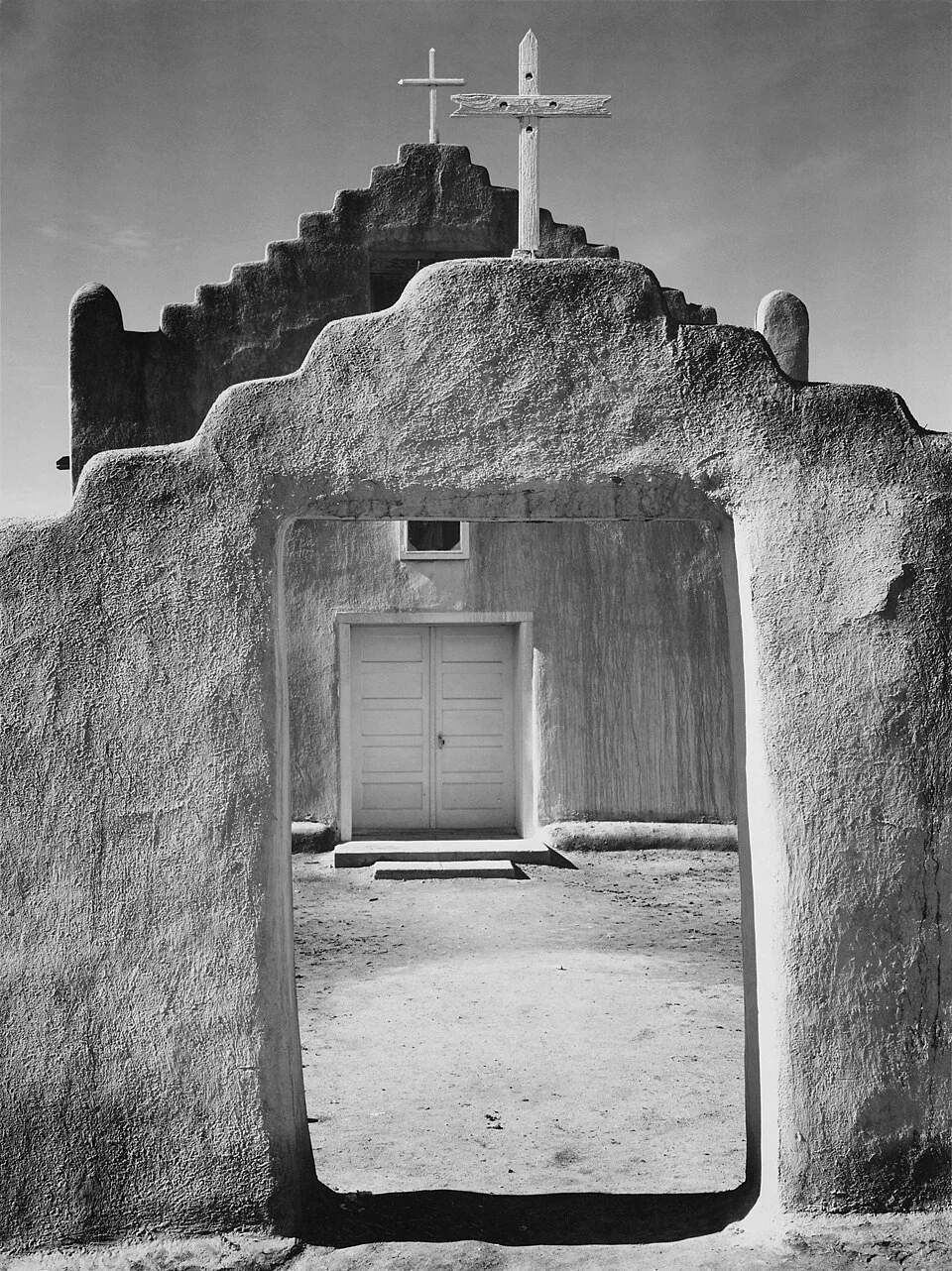
Church, Taos Pueblo (1942) by Ansel Adams (Source: National Archives)
1. Visualization (See it before you shoot it)
Adams didn’t just walk up to a mountain and hope for the best. He practiced Visualization.
This is the mental process of seeing the final print in your mind’s eye before you even set up the tripod. He knew exactly how deep the shadows would be and how bright the snow would look before he clicked the shutter.
The Lesson for Us: Stop spraying and praying. Whether you're designing a website, shooting a commercial video, or writing a blog post, build the final product in your head first. If you don't know what the destination looks like, you'll never get the exposure right.
2. The Zone System (Control your contrast)
The Alinders often curated work that showcased extreme technical precision. Adams invented the "Zone System" to translate the chaotic light of the real world into specific shades of gray (from pure black Zone 0 to pure white Zone X).
He forced the camera to capture the mood he wanted...no “auto” settings there.
The Lesson for Us: Take control of your tools. Don't let your software defaults dictate your creative output. Adjust the curves. Tweak the contrast. Make the medium work for you, not the other way around.
3. Patience is the only filter
There’s a famous story (recounted in Mary Street Alinder’s biography) about Adams waiting for hours in the freezing cold just for the light to hit a specific rock face in Yosemite. He didn't hack the lighting. He waited for the world to align.
The Lesson for Us: Slow down. Great creativity isn't about speed; it's about timing. Wait for it…get the shot.
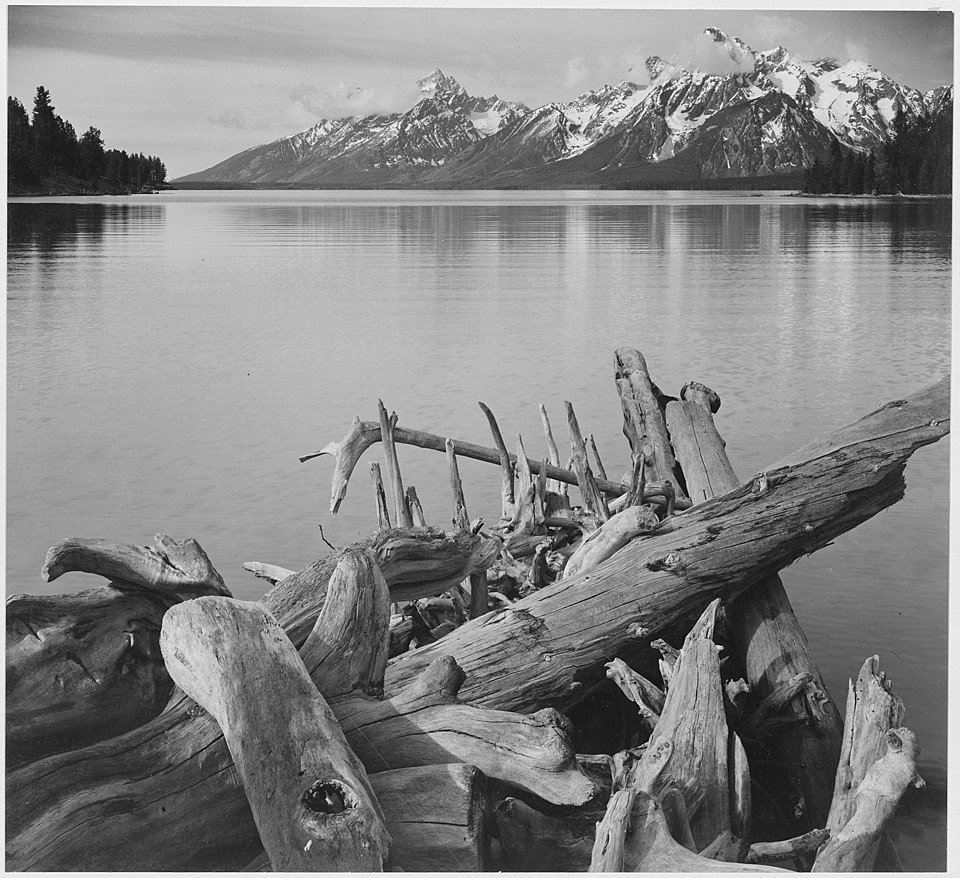
Jackson Lake in foreground, with Teton Range in background (1950) by Ansel Adams (Source: National Archives)
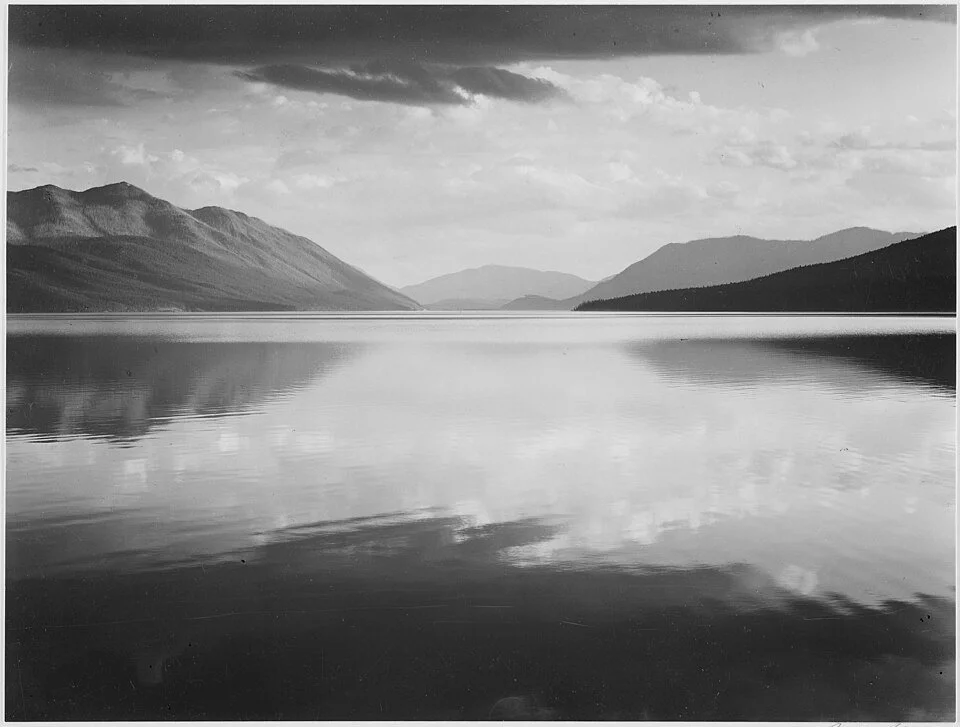
Evening, McDonald Lake, Glacier National Park (1942) by Ansel Adams (Source: National Archives)
Keeping the Legacy Alive
The Alinder Gallery played a pivotal role in cementing photography as a fine art, proving you didn't need to be in NYC or LA to command global respect…you just needed expertise and a vision. (You can read more about their impact in this NYT archive piece).
At Feeling Creative?, we believe that whether you use a pro camera or a digital tablet, these rules still apply. See the image, control the medium, and have the patience to get it right.
And yes, if you type AlinderGallery.com into your browser, it will lead you here. Hopefully I’ve shed some light in a good way on the gallery, the Alinders and Mr. Adams. Maybe one day Ms. Alinder will stumble upon this, hopefully she’ll say hello.
Author Bio:
Mike Meyerson is the founder of FEELING CREATIVE?, and has worked in the video/film/advertising industries for over 25 years. He also loves photography, both snapping photos and admiring the work of others. Currently located in NY’s Hudson Valley Region and is always looking to build the network and find a new cool trail to hike (with his camera).
Follow me on INSTAGRAM.
